
3 Things Dementia Care Can’t Take From You
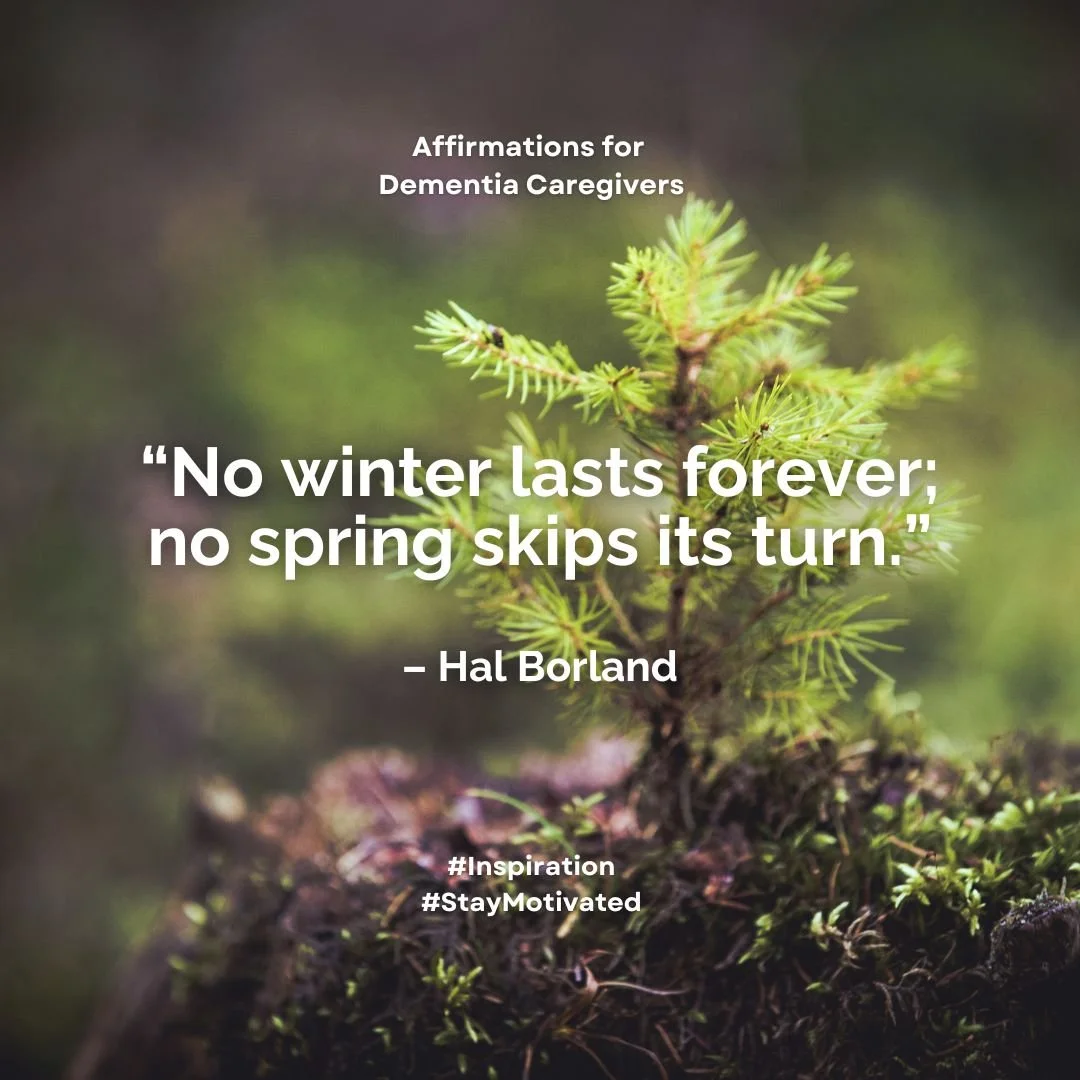
Here we are. We’ve completed yet another winter of our lives and have moved into spring—a season historically associated with growth, rebirth, and light.
This past winter was a long and hard chapter for me, and I’m guessing it might have been for many of you as well. The days of winter can feel long, isolating, and repetitious; and when you’re caring for an individual with dementia, it can feel even more that way.
Spending so much time indoors can contribute to a deep sense of isolation, as if you are the only two people alive. I often hear caregivers talk about their craving for contact with the outside world, even brief moments like a trip to the store or an interaction with someone walking their dog. Small reminders that there is more going on in the world than what’s happening within the four walls of home.
Winter is…interesting. There is an inherent feeling of dormancy, going inward, and mimicking what nature is doing. Doing less. Conserving energy. Sometimes, we find ourselves in “survival mode,” doing just enough to get through the day. This is what nature puts forth into the world, and we might be wise to take note.
During this past winter, I read the book, Wintering: The Power of Rest and Retreat in Difficult Times by Katherine May, who offers this: “Here is another truth about wintering. You’ll find wisdom in your winter, and once it’s over, it’s your responsibility to pass it on. And in return, it’s our responsibility to listen to those who have wintered before us. It’s an exchange of gifts in which nobody loses out.”
In dementia care, we do exactly this. We learn from each other’s experiences, passing on hard earned, “I didn’t ask for this lesson” wisdom that helps others navigate through their winters.
During the process of wintering, I’ve been contemplating something else:
What can still be true and consistent regardless of the presence of dementia in our lives? In other words—what can’t dementia take from us?
Here’s a short list I’ve come up with:
1. Dementia doesn’t get to dictate how I intentionally take in healing breaths throughout my day. I’ve been practicing “4-4-4-4” breathing through a mindfulness app, and it’s the best seven minutes of my day. Look it up if you’re interested in learning more!
2. Dementia doesn’t get to interrupt my body’s need for intentional stretching and movement. Even if I’m unable to leave the person experiencing dementia alone, I can still move my body in ways that feel healing and will oxygenate my muscles.
3. Dementia doesn’t get to interrupt my practice of hydrating consciously throughout the day. I can take regular sips of healing liquids (water, tea, smoothies, etc.) that are designed to nourish my body and remember I’m doing a kindness to myself in this difficult time.
What other self-nourishing practices can you think of that dementia can’t take from you, regardless of your circumstances?
In the role of caregiver, you are wintering and you are learning. You are gaining insight and wisdom into what it means to care for another human being in one of the most difficult circumstances we can find ourselves in. Courage is an essential characteristic in this role.
Katherine May writes:
“It often seems easier to stay in winter… But we are brave, and the new world awaits us… We, who have wintered, have learned some things.”
So, friends, here we are. We made it through winter and are in a new season. Your wintering experience may still be unfolding—but no doubt, the world around us is blooming and becoming something new.
In this space, you are seen and appreciated. Thank you for all you do.
Sending you peace, strength, and courage for the continued journey. Welcome to the light.
Reflections inspired by:
The Pleasures of Wintering, by Erin Niimi Longhurst
The Happiness Year, by Tara Ward
Wintering, by Katherine May
Who We Are Becoming Matters, by Norma Kaweloku Wong
